
In November 2025, the FDA removed the black box warnings from Menopause Hormone Therapy (MHT) labels.
We know that there is a lot of info about MHT on our socials. There’s also a lot of misinformation, conflicting information, ongoing confusion, and even fear and stigma around MHT.
And so this black box warning decision has left many in the dark about what this change really means.
When the FDA announced they were removing the warnings, it stirred up quite a bit of controversy. Some experts, like Dr. Jen Gunter, criticized the decision, worrying that it could lead to misinformation and an oversimplification of the risks and benefits.
We get her concerns. This happens a lot in women’s health.
So, why did the FDA make this change?
The decision was driven by a growing body of research that challenged the previous understanding of MHT’s risks and benefits. The original study had limitations, and recent evidence suggests MHT may benefit younger, recently menopausal women.
But it’s nuanced and every woman is unique. That’s why personalized risk assessment and open conversations with healthcare providers are crucial.
Here’s what Canadian Experts are saying:
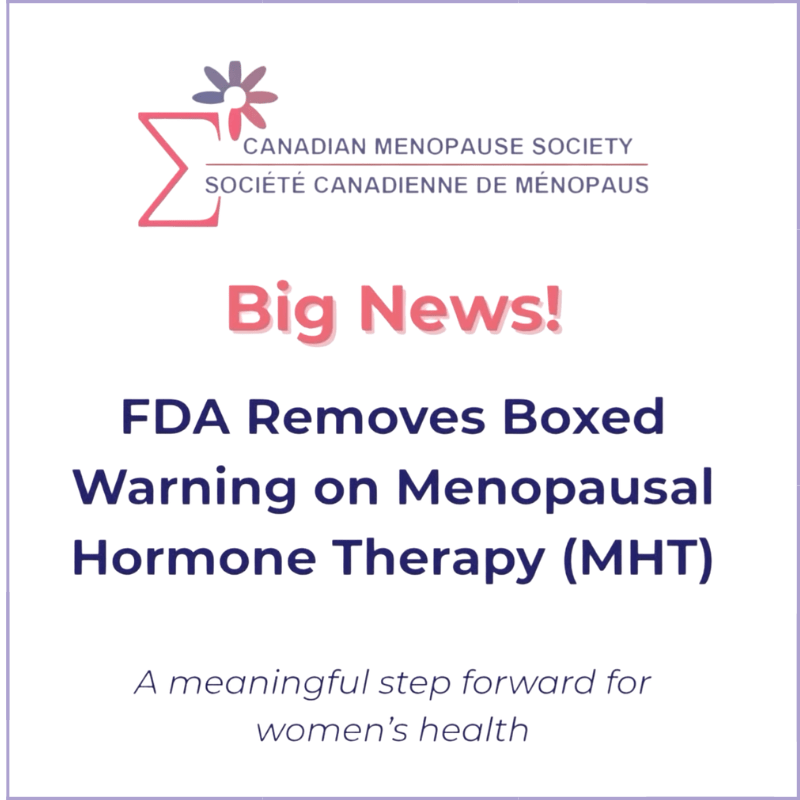
The Canadian Menopause Society applauds the FDA’s decision saying it reflects updated science that will give women better info about hormone therapy safety, especially if they start taking it before they’re 60 or within 10 years of menopause. Getting rid of the warning is a long-overdue correction that supports better care. LEARN MORE

Dr Jennifer Zelovitzky Clinical Director of Women’s Health and Vitality at Medcan, calls this a “monumental day,” noting that the warnings have misled and scared women for decades. She acknowledges some press conference statements weren’t evidence-based, but emphasizes that this warning removal is a huge step forward. LEARN MORE

Dr. Shafeena Premji leading Canadian menopause expert explains in detail why the black box warnings can scare women. Dr. Premji also outlines the differences between local/vaginal estrogen and systemic estrogen, and why they need to be evaluated differently in the context of each patient’s medical profile. LEARN MORE
Decisions about MHT should always be made with the guidance of a qualified medical provider and require a nuanced approach.
We’re hopeful that the FDA’s decision will help reduce some fear and stigma around MHT.
We also look forward to more research and clear, evidence-based information to help women make informed choices about their health.
Got more questions? Reply to this email and we’ll do our best to find you answers.
Can’t wait to see you next Thursday.
xoxo,
Mikelle & Michelle
