Episode Transcript
Speaker 0
GLP ones, they're everywhere. Everywhere. Like your feed, your group chats, your dinner parties. Just Everywhere.
Speaker 1
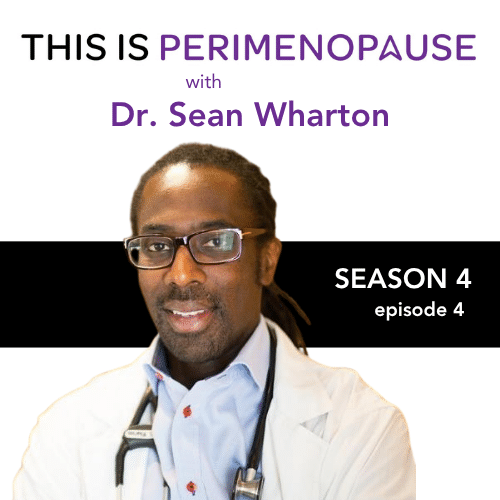
On a GLP one, thinking about it, just curious. It's always great to get information from an expert and not from a twenty second reel on your social feed. So today we're sitting down with obesity expert, internal medicine physician and founder of the Wharton Medical Clinic, Doctor. Sean Wharton.
Speaker 0
He has been working in this field long before the Kardashians even heard about GLP ones, so the man knows a lot. And he today in this conversation, he breaks down not only how GLP ones work, but why our bodies are changing in midlife and why some women struggle more with their weight than others.
Speaker 1
Also share he also shares what happens when you stop taking a GLP one and maybe or perhaps most importantly, how to decide if taking one of these medications is a right choice for you.
Speaker 0
It's such a good conversation. And you're gonna listen. You're gonna love it. And then you're gonna wanna come to the National Menopause Show and check out doctor Wharton live. Tickets and speaker information, it's all in the show notes. Please check it out.
Speaker 1
This is perimenopause. Let's get into it.
Speaker 0
Can I tell you my most favorite thing about the National Menopause Show? Yeah. It's, it's not the expert speakers and seminars on every topic related to perimenopause and postmenopause. It's when you stand in line for a coffee or you're walking through the exhibitor hall and hearing women you've never met describe the exact symptoms you're suffering with out loud. And nobody flinches. Nobody flinches. It's it's a whole thing. You walk in thinking that I'm alone. I'm the only one, and you leave knowing that you absolutely never were.
Speaker 1
Right. And let's just circle back to the more than forty experts on stage talking about all the things, hormones, sleep, sexual health, nutrition, mental wellness.
Speaker 0
It's basically a year of our podcast rolled into one weekend.
Speaker 1
How awesome is that? Pretty awesome. Whether you're curious, already know a lot about menopause, or just want to find out the latest updates in women's health, this show is truly for every woman. And there's also an incredible marketplace for shopping, which is great to discover your new favorite brand and you get to meet the founders behind some amazing Canadian brands specifically and a bunch of menopause care providers.
Speaker 0
The National Menopause Show runs October seventeenth and eighteenth at the International Center in Mississauga. Tickets, guys, they're only thirty five dollars for one day or forty five dollars for both days.
Speaker 1
An amazing price for two full days of evidence based answers in a room full of women who get it. Go to national menopause show dot com.
Speaker 0
And bring your sisters, bring your mom, and bring that friend who keeps saying everything's fine. Tickets are on sale now at national menopause show dot com. We can't wait to see you there.
Speaker 1
Doctor Wharton, welcome. We're so delighted to have you. We have so many questions. This is a topic that I don't know anyone who isn't very interested in this topic, particularly a woman who has struggled with body composition changes as a result of a variety of things, predominantly perimenopause. Hands up for anybody who knows what I'm talking about. But before we delve into that, you are a pioneer in obesity medicine. Would love to learn a little bit about you and why obesity medicine and your clinic as well.
Speaker 2
Great. So I'm I'm an internal medicine physician. And as I was going through medical school or going through my residency, it became clear that a lot of times, with people who are living with obesity, were also struggling from other medical conditions that an internist would work on type two diabetes, coronary artery disease, fatty liver or Maslow d or MASH or is that what we call call it. And nobody wanted to dress weight in the room because this, they would just give more blood pressure agents, more diabetes medication agents. But when when, you know, a a weight of a hundred and fifty kilos or, like, three hundred pounds was the issue, that wasn't addressed. One and and I I always wondered why. One, the I likely, the way that it was addressed previously was very biased and stigmatized and would cause problems. It would open up a Pandora's box, and there was no treatment. What what were you gonna do? Like, let's talk about something that I can't treat you for. And as I knew that there was something there, there was science, there was biology, there was, a physiological mechanism that we didn't understand. So I became fascinated about the research into it and finding out about it, but also the clinical need because I'm an internal medicine doctor. So I'm gonna be doing clinical medicine, not just research in academia. And I start and and I also really felt that it was a area where there was a lot of discrimination. As a black man, I face, prejudice, stereotyping, and racism. People living with obesity face bias, which is similar to prejudice. They they see stigmatizing images of themselves, not looking bright or capable, and, that stereotyping. I understood that and they face discrimination. The people think they're helping or don't even know that they're being discriminatory, just think that they're saying positive things like, I gave you the meal plan last week. What did did you not follow it? Why what what happened? That the exercise regimen, are you do you not love yourself? Like like those messages are completely discriminating, but from a paternalistic standpoint sound like they should be helping. So even understanding what biostigma and discrimination is was a fascinating field for me and coming from a field where I I felt a lot of that just being a black man and a black person in this in this world. It seemed like it would really fit. So that's why I went into BC Medicine.
Speaker 1
When did you start the Wharton Medical Clinic?
Speaker 2
Yeah. So I finished my residence, my internal medicine residency, which is a four year residency after medical school. I was at McMaster University. And, right away, I knew I did not wanna just, be a hospital doctor. I shouldn't say the word just. I didn't wanna be a hospital doctor. I wanted to be an entrepreneur. The first person with, somewhat, capacity in my family to potentially develop not just not just money, but wealth.
Speaker 1
Mhmm.
Speaker 2
I wanted to figure out, could I be an entrepreneur? Could I actually build something? And if it fails, it fails because I failed it. If it does well, it does well because I did well. And and I don't want a a ceiling, and I wanna try and build something. But I still wanna do, I still wanna be a doctor, work under the, public system, and all those things. So I created the Wharton Medical Clinic with the idea of entrepreneurship, but also with the idea of not having, the constraints that the ivory tower university system and other things put on you when you're trying to develop something that needed development quicker than people were able to understand by a stigma and discrimination and and would take long, long time. So I'm like, I'll do it myself. And, I'll make these changes. I'll make it under the, the public system. Like, this is a public system problem just like high blood pressure, just like hypothyroidism, just like a broken leg. It needs to be treated. We need to care enough about people living with obesity to actually treat them. So I did it under a government based system with the idea of entrepreneurship at the side. Entrepreneurship didn't necessarily work out that well because I'm doing it in a public system. So Right.
Speaker 1
So there was never
Speaker 0
There's a there's
Speaker 1
a lot of this going on in that. Yeah.
Speaker 2
Which was it was totally fine. It was totally fine because I because I had both of those things that were needed to I needed it to be to be accessible. I needed to be accessible for the people who couldn't access it, migrant populations, the the indigenous woman on a reserve, the indigenous man on a reserve, the new Canadian who works at Amazon and can't find their way to, a clinic easily and struggles would struggle with socio, at, determinants of of health. I needed access to
Speaker 0
care. Mhmm.
Speaker 2
So it had to be built on a system that could actually actually do that. And, so that's why I created it. And I believe that, you know, if you need cardiac bypass surgery, you need to go to hospital. You need to go to a tertiary level, pay for all the parking at the hospital because you need a heart bypass surgery. Surgery. But if you need health care and obesity management care and long term care, you need to go just about anywhere and everywhere and you need it needs to be accessible. You can't pay twenty dollars to park to comes to go go somewhere on a weekly, once every two weeks, once a month basis. It's gotta be accessible. So it has to be built in the community. It has to come out of the ivory tower into the community. And then so Wharton Medical Clinic was designed as that to be able to spread across to be able to have appropriate access to care and then eventually moving to virtual because that even creates greater capacity as access access to care.
Speaker 1
Before we get into the menopause, perimenopause, GLP-one discussion, I want to talk about reframing obesity. I would say most people don't know what that actually means or why it actually happens. Can you talk to us about what that reframing looks like and why it's so important?
Speaker 2
Yeah. So reframing obesity was important because of what you just said, Mikkel, is that understanding obesity is difficult. I don't understand obesity. Scientists don't understand obesity. We don't really understand the the life evolutionary component of it. Why somebody could be thin for a while and then now all of a sudden gain a significant amount of weight, look exactly like their their their aunt or their grandmother after age thirty five or have weight from the very beginning at age five, six, ten and have challenges in high school and grade school and then have weight throughout their challenges throughout their entire life. Why somebody could have a highly elevated weight, living in a larger body and their metabolic conditions are perfect? There's no cholesterol problem. There's no blood sugar problem. Or why somebody could have just just a a belly and thinner legs and have lots of metabolic problems. So we're learning we're we're humbled by the fact that we don't really understand all of it. As a result of that lack of understanding, we have to make the definition as as somewhat clear or simplistic as possible. So instead of framing it as a BMI problem, once you hit a certain body mass index or certain weight, you have obesity. You're diagnosed with obesity. Well, that's not true. There's people with with high weight that don't have obesity. Let's define obesity differently. Obesity should be defined as excess or abnormal adiposity or adipose tissue that impairs health. So if it's impairing your health from a standpoint of of metabolic conditions, mental health conditions, physical conditions, then it is obesity. So if you're a South Asian woman and you have a BMI of twenty six, but it's central in the belly and it's causing prediabetes, you have obesity. You wouldn't be you wouldn't be defined as having obesity in in, in an adjust by BMI because that BMI cutoffs were primarily for white European men. Right? Those cutoffs work great. If you're a white European man, those cutoffs correlate nicely to health risk. If you're a African American woman, it's makes it it makes it more challenging to use those BMI cutoffs. If you're a South Asian woman, it makes it more difficult. If you're a Latino, I mean, if you're a woman, it makes it all living across the world. If you're a woman, it's those cutoffs are not the cutoffs that we should be we should be using because we have we have hips and weight is there for a reason and protective factors and, and the maternal factors. And so, so so BMI leftist, BMI wasn't isn't wrong. It's the cutoffs were wrong and the way we use it is sometimes wrong. And that's why the definition should be changed to say excess or abnormal adipose tissue that's causing an impairment to a person's health is what, what we talk about when we talk about living with obesity.
Speaker 1
And adipose tissue
Speaker 2
is? Fat. Fat tissue.
Speaker 1
Okay. Okay. Excellent.
Speaker 2
The fat tissue can be be kinda two kinda components of fat tissue. The subcutaneous fat tissue or or the visceral or the one that's closer to the to the to to to, the the organs. But but overall, it's fat tissue dysfunction that is causing that causes, the impairment of health mainly. It's not it's not muscle or bone. This is a fat tissue component.
Speaker 0
And at the Wharton Medical Clinic, one of the protocols that you use for for people with obesity is the GLP ones. But is there are there other protocols that you use as well?
Speaker 2
Yeah. So one of the interventions
Speaker 0
to Interventions. Thank you.
Speaker 2
Yeah. Yeah. So one of the interventions to help people to improve health is to is to use, GLP ones as part of the intervention. And the intervention overall needs to get to, to one main thing, is to sustain lower calories, to be able to, to eat a healthy diet or crave or want a healthy diet and to move because there's there's nothing else. There's those are the only things that make a difference in terms of our metabolic health and our overall health is our eating behaviors and the movement. But those things are hard to do. Mhmm. They're very hard to fear when genetics are playing against you, when lifestyle is playing, against you, when the environment is playing against you. Those those simplistic things of eating healthy, the right amount of calories, and moving, are the outcomes are the outcomes, but those are dictated by so many different things even past traumatic disorder and, past traumas and and, and, genes and our gen genetics and and everything else. So so so getting to that simplistic answer and and when people go, it's a it's an easy answer. You just gotta eat less and exercise more. Yeah. It's true.
Speaker 1
But how do you plan on doing that when it's wrapped up
Speaker 2
into so many different things? Like, saying to be to be to be rich, to be wealthy, all you need is, like, you know, millions of dollars just to get get Yeah.
Speaker 0
Just do that. Millions of dollars.
Speaker 1
Right. Easy. If only it was that easy.
Speaker 0
So let's let's dive into the GLP one conversation a little bit then. I think it's all over the Internet now. It's all, like, it's it's everywhere, and yet I I think it's still something that maybe a lot of people, think they know about but don't maybe fully understand it. So in really simple terms, can you kind of explain what what a GLP one is and how it works?
Speaker 2
Yeah. So, So, a GLP one is something called a incretin hormone. So there's there's hormones in our in our gut that tell our brain and our body that we've just eaten food. Mhmm. And it's the messenger. So it goes from the gut where the food is to the rest of the body to say food is coming in, release some insulin to allow that food and energy to go into fat stores and stores so we can use it later on at two o'clock in the morning when we don't wanna wake up. Like, Human beings are don't have to eat all the time because we have insulin because insulin stores energy and releases it slowly. And that's all because of the way the pancreas and the insulin works and the distribution of, of, energy. The same GLP one that we all make also tells the brain to stop eating because if you overeat, then you can't run away from the lion all that easily after their and when it starts chasing you because you're eating too much. You have to stop some at some point. So these hormones are stopping hormones. Stop. I have too many fat cells. I have too much. Now obviously, some people live with a good amount of GLP one and it works really well. So there's two components of having a lot of GLP one or the sensitivity to it. And if your weight stays at a hundred and thirty pounds your entire life, you probably got pretty good GLP one. And it's sensitive and it works fine and you don't have to worry about anything and it's great. If you don't have great GLP one, enough of it or enough sensitivity, then you may have two things. You may have both type two diabetes because your it doesn't tell your body to release the insulin properly or sensitive to the insulin and sugar stays in the bloodstream and doesn't tell the brain to stop eating. So you keep
Speaker 1
on eating and then wait continues to get elevated. So this concept of of
Speaker 2
lacking GLP elevated. So this concept of of lacking GLP one or incretin hormones, because then GLP one happens to be one of the first ones we've discovered that that we can isolate, tends to be the pathways that we work on. Working on an endogenous, endogenous meaning something that is already in our system Mhmm. Pathway and enhancing it the same way we, when thyroid doesn't work, it just stops working. We give thyroid. So so endogenous thyroid is our own thyroid that we make. Exogenous thyroid is the pill that you take. So exogenous GLP one is enhancing our own endogenous GLP one that doesn't work all that well.
Speaker 0
Okay. I you know, I
Speaker 1
I thought I understood GLP ones, and now I realize. I didn't I didn't know we had
Speaker 0
I didn't know we had an endogenous GLP one.
Speaker 2
Yep. It's working all the time. Every single time you have breakfast and lunch, anytime you eat you eat any amount of food. And if you don't eat food, then your GLP one goes down purposely to make you hungry. Right? So so when we have enough GLP one in our system so so the exogenous GLP one then the this we're taking it as an injection. It it tells the brain you've had enough food when in fact maybe you had just, quote, unquote, the right amount of food to to keep your weight down. Instead of having, three thousand calories a day, you had fifteen hundred calories a day, which is enough Mhmm. Or seventeen or eighteen hundred calories, which is enough. And then but the GLP one now tells tells the brain you've had three thousand. You've had a lot. Everything's good. You don't need to eat anymore. But your body needs three thousand calories because you're a bigger person, so it needs three thousand calories. So it takes those extra calories, those extra, let's say, twelve hundred. It was eighteen you ate eighteen hundred calories, but your body needed three thousand. So it takes the other twelve hundred from your fats fat cells. And that's the way you lose weight. You start losing weight because the body uses the energy that's already stored in your body because the brain says, I've had enough energy. I'm good. And it's because of that extra GLP one that was given to you that tricked the brain or told the brain, you're good.
Speaker 1
Use your stored energy for your
Speaker 0
Interesting. And how long GLP ones is is relatively new to me and I would say in the last year and a half or so. How long have you been using it as an intervention to support people with obesity?
Speaker 2
Yeah. So knowing about GLP ones has only been around for about, thirty years. Strange. This is always we've always had we've always had GLP ones since we were humans, but we didn't know. We didn't know that they were there. Like, in my time in medical school, I started medical school in nineteen ninety seven. They didn't talk about GLP ones, and that's ninety seven. That's not that long ago. So so leptin and GLP ones were started to be discovered in the early nineties, like, around nineteen ninety four. So so they only started teaching them in medical school in about after two thousand ten Wow. Or so. And that's about the time that the researchers started to academically look at we knew about glucagon, but we didn't know about GLP one. So that's why GLP ones are called glucagon like peptide because we took an old molecule that we knew and it looks just like it, but it's not it. So what is it? It's glucagon like and it's a peptide, which means it's a amino acid. It's a hormone like insulin's a hormone, like thyroid's a hormone. It's it's a big amino acid peptide, but we don't know what it does. We'll just call it glucagon like peptide, GLP one. And then we'll figure out what it does afterwards. And then they figured out the receptors and there was two receptors. They the the glucagon like peptides fit into one receptor and another receptor, but there were different ones. One was called GLP one receptor. The other one's called GLP two receptor. And there may be a couple more. So that's where we get the GLP one, GLP twos and threes, although they don't seem to do anything. But GLP one seems to actually do something. So so that's that's kind of where where we started to to understand it in about two like, do the research on it in two thousand five to two thousand and ten. These guys were in the back rooms of the of the of the companies that made insulin and everything else. And people were like, what are you working on? We're like, I'm working on this glucagon thing. I think it may work, but I don't know. Well, I don't know. Maybe shelf it, maybe not. And they're like, I think it works on not just diabetes because we're a diabetes company. I think it works on weight. Don't bother with the weight thing. That's not a good not a good thing. Not a good thing to work on weight. We failed with weight in the past. People have died with weight management medications. Don't do it. They're like, think we should think about it. Interesting. Eventually, eventually, it became known that that, one, it works without too many side effects for diabetes. But this weight thing that you guys were talking about, it seems to decrease weight in people with type two diabetes that we're using it in. Does it work in people without type two diabetes without lowering their blood sugars? Let's give it a shot. And then some people in the companies were like, no. No. No. Don't give it a shot.
Speaker 1
Let's not go down this road.
Speaker 2
And then people pushed and said, I think it's good science. I think it's good bio biological sciences, academic. Let's do it. And so the first approval for type two diabetes came in about two thousand and twelve or so, and then the first approval for weight management came in, two thousand and fifteen fourteen two thousand fifteen.
Speaker 0
Okay. So why did it take ten years for it to reach the Kardashians? Like like
Speaker 2
Oh, oh, yeah. So why did it take that long? One, because the first iterations of it were, got broken down by the by the bloodstream pretty fast, and you had to take it twice daily. So and the weight management wasn't all that great. This molecule not just has to make it to the pancreas, has to make it to the brain. The brain's a little bit of further way to travel. If you think taking the injection in your belly, think that the pancreas is really close, you just need a little bit of it. But if you need it to get to the brain, it's a little bit further to travel. This is a way to think about it. So you need a little bit of a bigger dose, a little bit more, something that works a little bit better because weight management is here in in the in the beyond brain. And so the first iterations were were twice a day, and then we got one that was daily. And the weight management came and the weight loss was about eight to ten percent, which was a big pretty big deal for somebody who's living with severe obesity and food noise and it just Yeah. Yeah.
Speaker 0
Yeah. Food noise. Yeah.
Speaker 2
Eight percent keeping keeping off eight percent, once a day injection, people were like, this is terrific, but it that's not gonna hit Hollywood. So when fifteen percent came around, which is the once weekly sum of Glutide, Kim Kardashian and Elon Musk and Hollywood got fifteen percent. You look different at fifteen percent weight loss. You don't look that different at eight percent. There was a hump. And once that hump happened, then all of a sudden, it was kinda like when the Internet kind of happened and all of a sudden everyone stopped figured out that they could use it or cell phones. When did cell phone become all of a sudden it went, you know, that just one hump takes it, one, takes it to the next level where everybody knows about it. And it was semaglutide hitting fifteen percent weight loss with a once a week injection, people starting to notice other people. A noticeable weight loss that was sustained, which had never been never happened before. Mhmm. Sustained. People always lost weight. You went from this big to this big, and you're in front of people's magazine. But two years later, we know what you're gonna look like. Yeah. Yeah. But nobody ever ever sustained weight loss without bariatric surgery. So this was shocking. Okay.
Speaker 0
But to sustain it, are you on it for the rest of your life? Like, how do you how do you sustain it? Okay. Okay.
Speaker 2
Yeah. Maybe, maybe not. If you're in a if you're in a rat study, because that's where we started all this, then, yeah, you gotta take it every single week just for your thyroid. If this if you're truly deficient in thyroid, if you don't take the thyroid medication every day, you're gonna be back to low thyroid levels and and and low energy because you don't have thyroid. Mhmm.
Speaker 1
So
Speaker 2
there's this so if I'm telling somebody that you have low GLP one, you literally have low GLP one, and nothing's gonna change that. Your genetics decided that you'd have low low GLP one. You don't have control of it. There's no control of your GLP one endogenously. There's no control of your thyroid endogenously. There's no control of your insulin endogenously.
Speaker 0
So then at what point do you stop stop losing weight? Like, do you does your weight eventually level out? Like, how
Speaker 1
do like, or do you just, like, disappear? Like, you know what I mean? Like, how do
Speaker 2
No.
Speaker 0
How does that how does
Speaker 2
How does it work? Well, god, whoever she is, put a lot of mechanisms
Speaker 1
Thank you.
Speaker 2
A lot of mechanisms in place for us not to lose weight and not to die because losing a lot of weight equals death. Mhmm. So there's just so many redundant mechanisms in place to where you plateau, and that's just evolution.
Speaker 1
Mhmm.
Speaker 2
Because if you did continue to lose weight, cancer, HIV, pneumonia that doesn't resolve because there was no antibiotics, you die.
Speaker 1
Mhmm.
Speaker 2
So if there's, if there's no ongoing chronic disease to make you die and it's GLP one being administered, it'll plateau at some point because there's because there's ghrelin and there's, AGRP and there's NPY and there's CCK CCK, and there's all these other things.
Speaker 1
I go, wait a minute. Let me
Speaker 2
You need to
Speaker 1
eat something. You need to eat something. You need to you need to eat something.
Speaker 0
And then there's just the stress of my life
Speaker 1
that makes me emotionally eat. Exactly. What's happening? Wait a minute. Yeah.
Speaker 2
So there's always going to be a plateau. Okay. And, and, it, and and where that plateau happens, we don't we don't know because everyone has different to GLP one. But it's going
Speaker 1
to be a plateau.
Speaker 2
You won't you will not die if you continue to actually take it. You you you will plateau. And the question of whether you need to continue taking it forever, to keep the weight off if you are truly a GLP one deficient and this truly was the only thing that made a difference. And the answer is, yes. You need to take it forever to, keep the weight off. But if you don't wanna keep the weight off, then stop taking it. Or or if you've got another method of keeping the weight off. GLP one is just one hormone. There's, like, a hundred hormones. Maybe you figured out maybe you turned into a yoga instructor or an exercise guru, and that's all you do all day long. You don't go
Speaker 1
to work anymore. You're not going to Bay Street. You're not going to you're not sitting down on a computer. You're actually doing exercise all day. You switch from being a corporate, lawyer to, to an exercise. Maybe that's that's your
Speaker 2
forget forget the GLP one. You just need to continue to exercise.
Speaker 1
Mhmm.
Speaker 2
And so if those changes happen, then maybe somebody could stop the medication and keep the weight off in a healthy way in a healthy way. But previously, all we had was unhealthy ways of keeping weight off, which was the grapefruit diet and the celery diet. So you you were skinny, but unhealthy. Mhmm. Or we had we had ways of giving you medication to keep your cholesterol down, your blood pressure down. So doctors had a way of treating your health, and and, patients or people had a way of treating their weight. The weight one was unhealthy, and this one was healthy, but you're taking medications. Now we're in a position where you can get your weight down and maybe not have to take all the diabetes medications, all the blood pressure medications with this one medication. Yes. You're still taking a medication, but you're getting you're eating a healthy diet. You're eating appropriately. You're learning about nutrition. You're doing all the right things. You're getting taking the lowest dose possible, not the highest dose possible.
Speaker 1
Maybe addressing some trauma. Trauma. That's why Yeah. Yeah.
Speaker 2
And now you can address those trauma things because because the real estate in the brain was is is one of the big things here. People living with obesity, truly living with obesity have had use up so much real estate thinking when am I gonna get food? What is gonna imagine if you had a total addiction and it's around you all the time and you've gotta have it. Yeah. Imagine how much real estate that takes up in your brain away from your family and your kids and your planning things. You're planning the food sometimes more than planning when you're planning the sneak away.
Speaker 1
Mhmm.
Speaker 2
When is my time to sneak away to that drive through that I usually go to? That's, and that takes takes precedent, as you try to do all the functional things in your life, like going to work and making sure that everything's okay, making sure that nobody knows what you're doing.
Speaker 1
Now the real estate is is you don't have
Speaker 2
to worry about that anymore. It's gone.
Speaker 1
And you could actually go to work, actually function Be in the moment. Kids and be in
Speaker 2
the moment. Yeah. That was
Speaker 1
Wow.
Speaker 0
Magic. Huge. Yeah.
Speaker 1
So that's probably actually also really I think why how you phrased that resonated so much with me is that I see a parallel to women in perimenopause where all of the sudden they don't recognize themselves anymore and they can't remember the name for fork and they feel like they wanna poke their husbands or partner, whoever it is, eyes out with said fork that they can't remember the name for. They don't recognize themselves. So much noise, and they're exhausted, and they can't sleep. And sorry. I could go on for for twenty minutes. I'll stop there. One of the big over seemingly overnight is whose stomach is this? Where where did this come from?
Speaker 2
This is central.
Speaker 1
Right? And you talked about skinny, unhealthy, or when you reframed obesity. Right? And we if you're on the Internet for five minutes and you're over the age of thirty five and female, you've been told that visceral fat is very, very dangerous and you need to fix it and so on and so forth. Can we talk about maybe what the research is showing about GLP ones in a population that probably isn't the intended market for this drug as it currently is prescribed?
Speaker 2
Yeah. And interestingly, I think it should be the intended market. Fascinating. And will be the intended market. The intended market should be visceral adiposity
Speaker 1
Okay.
Speaker 2
Initially, because I'm an internal medicine doctor and that's what I wanna do. I wanna do decreases to see coronary artery disease risk decrease, to see fatty liver risk risk end up decreasing. Now if I was an aesthetic doctor, we'd be having a different conversation. So I'm not against the aesthetic doctors and what's and what is going on, but I'm an internist. So I will talk about what what kind of I do. So as women get older and they go into their perimenopausal time frame, instead of having the the hips and the and the tiny little waist, I mean, you look at a at a at a eighteen year old and a twenty two year old, it's it's a waist like this and then and the hips. As you start when you become forty, it's starts to get straight. And you're like, where is this straightness coming from? Like, what's happening? And it's not straight because the hips are smaller. It's straight because the because the belly starts to expand out. So you start to have more of that straight or apple component as opposed to the pear component. Apple being bigger in the in the center. So think of think of an apple, but bigger in the center and then the bottom part is the person's butt. Tiny little butt, bigger apple.
Speaker 1
Nice. Look. That's it. We can kind of think of the apple. It's it's
Speaker 2
the pear with the pear's honey at the bottom. So and, and that type of movement of fat may happen for protection reasons, may happen because it's liberated slower, and then the the the kind of the concept is is that the youngest person in the village has a high metabolic rate, has to get food very quickly. So you're feeding them. You're feeding the baby, like, ten times a a AM day. You're feeding the pregnant mother relatively quickly. Feeling that eighteen year old boy who has to run and and maybe go gild at Buffalo or something, frequently. But as you get older, you you become a more efficient human being, and you store your fat accordingly, and, where you can access it slowly and nicely so that you can don't have to expend it very quickly and because you're not gonna get the food first. You may get the food last
Speaker 1
in the village. So the older man and the
Speaker 2
older woman get food last. So you better be efficient. Your brain is more efficient, slows down. Kidney is more efficient, slows down. And your store your fat in areas where you can keep it longer and just use little bits of it, like a nice pantry. And so but, unfortunately, that pantry also leads to, inflammatory markers that go around the coronary arteries and a number of other things and start incurring risk. And we have too much in the pantry, it ends up being a, a problem. So that's where we should expect to become more square as we get older. That's just just the way it is. There's no no one's beating that. Sorry. But we would don't want to have the increased metabolic risk that's associated with it. Some people may not like the look, but let's not if you don't like the look, look, fine. We can try and talk about that, see if we can get that down. But but we don't want that increased risk that ends up coming from. So let's try and get it down because there's just too much going into the pantry, and women get that in their perimenopausal time frame. It's just the way God designed it.
Speaker 1
We're gonna have a word with her later about this.
Speaker 0
Yeah. This is making me think though, Mikael. We had a conversation with doctor Diana Castleman about, cardiovascular disease and that there are markers. And if you have x y z markers, then you're at higher risk, and you maybe you need a a lipid. I wonder, though, if you if you have some of these cardiovascular disease markers, would that maybe make you more inclined Sorry. My
Speaker 1
thought
Speaker 0
I I don't know.
Speaker 1
Sorry. My thought I I don't know.
Speaker 2
Just just that you are at all risk. So whatever brings a risk down, we should be thinking about about about doing. If you're rich and have capacity, then that means going to the gym and having yoga and eating like Gwyneth Paltrow and doing all the right things. If you're not rich and don't have capacity and you're a Latino woman in in You
Speaker 1
have three jobs and
Speaker 2
Oh, you have three jobs and you're African American from slave nation and, things are things are things are tough, then potentially going on a GLP one will keep you around longer for your kids who still need you. So those are those are things. So anything that helps with the risk. And if you are a podcaster and love reading a bunch of stuff and love doing your own health, then do that. Don't don't do the GLP one.
Speaker 0
So but there is a cost for most of the women that are going on GLP ones. There is a cost associated with it. Most of us are not getting it covered by our health insurance. What is the cost? How how I've heard that coming down.
Speaker 2
Wasn't it? Yeah. Coming down tremendously. Tremendously. So in India, you can get it for, like, fifteen dollars for an an I've heard that.
Speaker 0
Yeah. I've heard that. Yeah.
Speaker 2
So if in India, you can get it for fifteen dollars a month, that means that it can be made for fifteen dollars a month. So here in Canada now, it's eighty dollars every month. So Oh, wow. Not quite fifteen, but it's eighty. That's that's not a lot of money. No. Not not a lot of money, but, I mean, that's that's pretty good. Right? And so so we're now at that stage. That was because the generics came in and then and then Novo Nordisk, the Ozempic making company, also had to compete to get their price down so they could squash the generic field because they can they they either they either can make it for eighty bucks and still make money, which is clear. That that's that's true.
Speaker 1
Yeah.
Speaker 0
Or they
Speaker 2
had so much money in their coffers that even if they lose money, they don't care. I think it's the former. They can make it for eighty
Speaker 1
dollars you're right. Yes.
Speaker 2
And still make money. That's what I'm guessing. And, so and so it's becoming more affordable. More affordable, and access to the medications and cost doesn't mean access to care. So we have to be careful that care means that you understand what the person's risk is, who they are, and how they could how they could improve their risk over the long term, how to eat healthy, not just we shouldn't just take GLP ones and throw them to the masses and say, oh, okay. Go ahead. Go. Go. Do it. Do what you need to do. No. I we care about you. You are loved. You're important. Your health is important. And how you think about yourself and your emotions are an important factor. And this is one of the things that may be able to help you along that line to give you more real estate, to work on all these other things, to be part of it, to enjoy your health and making mistakes are okay and stopping and going on again. And and it all of that's okay because you're cared for and you're left. Cheaper medications don't, don't immediately tell you that, but but, it it helps if the government is part of it. It says the government cares and they help to get it down. That's not what happened here. Generics came to the came into the market because Noble made a mistake. That's not what happened. But but the government coming in and saying, we care about you, and we're gonna help bring the price down, and we're gonna help bring access to care and people that know how to implement this cheaper thing that we now have. And make sure that you're taking it right. Make sure you can go on and off, and you're not blamed and shamed for thinking, I don't wanna take it. I wanna do something else. That's okay. Mhmm.
Speaker 1
Or I
Speaker 2
wanna take it. I wanna take it. I wanna keep taking it. That's okay. Like, we need that capacity to to, to show the love that is needed, in in, appropriate health care.
Speaker 1
Wow. Yeah. Please tell me you're training other physicians in some way, shape, or form. No no no pressure if you're not or no no guilt if you're not. But, wow, what a what a beautiful, wonderful approach to helping someone be their healthiest self.
Speaker 2
Yeah.
Speaker 1
And then, sadly, I think it's not common.
Speaker 2
Yeah. And that's because it's so easy to teach about the science of GLP one and the science of insulin resistance and where it does and the hypothesis, which we're still working out and we don't quite know. And people walk around saying that they know because they listen to Andrew Huberman's podcast or Joe Rogan a couple of times or something like that. I think they know what they're talking about. They don't. We don't yet. Even Andrew Huberman, brilliant, doesn't know a a Stanford guy doesn't know yet. But what what we should know is compassion. We should be able to figure that out. But it's much easier to learn the science and wanna know about the science, and it's so hard to learn compassion when it's integral to everything. I mean, we seem seem to know compassion when it's if someone has pancreatic cancer, there's no treatment for pancreatic cancer. So what are we gonna give them? Well, we can't give them any treatment, but we can give them compassion. We're not gonna say you're gonna die in in a couple months. We're gonna say we're gonna do the best we possibly can for you. That's what we're gonna say. We're gonna work with you and do the best we possibly can. When it comes to to, blaming and shaming and then thinking, you know, a little bit of science, it turns this whole field into something that it really shouldn't be. It turns it into into I know about all the details and I need to know about all the details. What you need to know about is love first and compassion first because those things then forward all the rest of the discussion. If you know that there's compassion and someone will treat you properly and that you're worth it, then all the other treatments start to fall in line. What science I'm using, what health care I'm using, what foods I can buy, how I should look at it changes. And that that helps the the health care provider that's trying to get the person there and it helps the person.
Speaker 1
Wow. I have a question that stems from personal experience. And I'm wondering about, and I suspect most of our listeners as well, if GLP ones are a good idea, whether it's to help you lose some weight that is causing a challenge for your health, or perhaps you're concerned about, you know, I have a very heavy family history of cardiovascular disease on both sides of my family and very young. So as my father had a quadruple bypass at age forty two example. Right? So I'm That is real. I've been monitored very closely for a very long time for both heart disease and, or coronary artery disease and stroke. And wondering about GLP ones, if they are a tool from a visceral fat perspective, which sounds like they are. Sounds like they are. Are there issues with are there risks or things that someone who is considering these medications should be thinking about? And I'm thinking specifically right now about progesterone which is a very important tool in the menopausal hormone therapy arsenal right to protect the uterus from developing cancer if you're also taking estrogen. Are there are there issues with absorption being impacted the absorption of other medications being impacted by GLP ones?
Speaker 2
Yeah. And I think that question revolves around where are we in our understanding of the science in the first place.
Speaker 1
Mhmm.
Speaker 2
So it's very clear that having a family history of coronary artery disease puts you at risk, but I don't know your the actual risk until I check your hemoglobin a one c, your your LDL cholesterol, and, a number of other factors, and then try to guess what primary prevention would end up looking at like. So primary prevention means that before you've had the condition, we're gonna try to prevent it from actually happening. That's preventative medicine. But there's preventative medicine on the secondary side, which a person's already had a heart attack. They had an MI. They had some heart disease. They had a bypass. Now they're like, I don't wanna get a second one. Right? If your dad could have survived at eight he he had his bypass at forty two.
Speaker 1
And get this. You're gonna love this data. He just turned eighty six.
Speaker 2
Oh my gosh. Oh, wow. That's amazing.
Speaker 1
Isn't that crazy? He gets a lot of attention because they're like, what? How is this? Wow. How is that?
Speaker 2
How is that? Yeah. So what we know is that there's clear information about secondary prevention. As soon as he had that heart attack, he went on aspirin, ACE inhibitors, beta blockers, and, and and then later on, some of the newer agents because it showed that you stops you from having a second heart attack or diminishes that second heart attack. But we have almost nothing to help us to understand about primary prevention even with people at at risk. Mhmm. So, we did the aspirin study. We did, in met and it was in doctors. Whole bunch of doctors, primary prevention. Take a aspirin works for a secondary prevention. So should work for primary prevention too. Just everybody take it. Mhmm. So everybody took it and it turned out that the that that, there was more harm than there was benefit.
Speaker 1
Mhmm.
Speaker 2
Well, that kinda
Speaker 1
Mhmm.
Speaker 2
That kinda sucks. You know, like, we're looking for something that helps us to not have that primary heart attack when you when you don't know all the different risk factors. And so so trying to guess at the science makes it a little bit hard. And then for us to if you were to think about taking a GLP one to help to prevent the risk of coronary artery disease down the road, it would be like, how long would you have to take it for? Does that mean you take it for a year? Does it mean take it forever? Does it mean that you have to have a certain target that you're supposed to be aiming to? Is the target a blood parameter like LDL parameter or hemoglobin a one c parameter? Or is it a waist circumference parameter? Or is it a h s c r p, which is the inflammatory marker in the body parameter? I don't even I don't know what it is. And I don't know that it would be beneficial if it causes some other problems like the like, if we know that that oral contraceptives have some challenge with some of the GLP ones in terms of the absorption. So those again are are the hormones and the sex hormones that that we're that we're end up dealing with. Would progesterone have a problem? If it was a patch, it shouldn't because it should get straight into the bloodstream and should bypass the the the the, the liver. If it's a pill, then it may be a little bit different. If it's, if it's other, methods, intermaginally, etcetera, etcetera, it should bypass all of those all of those challenges. So, so all this matters. It's like this it's like this, clock with all these spinning dials and you're like, if I spin this dial, will everything be okay?
Speaker 1
Well, I
Speaker 2
don't know. Is this dial spinning? Or is this does this cell stop?
Speaker 1
When did you choose the Exactly. Exactly. So don't take medical advice from someone on TikTok and find an expert who can speak like this about GLP ones in the context of, unique physiological
Speaker 2
risk. Risk.
Speaker 1
Risk. Risk. What you're willing
Speaker 2
to do, what you're willing to risk, and what
Speaker 1
Yeah.
Speaker 2
And what, and what uncertainty are you willing to take for that benefit? Some people
Speaker 1
are like,
Speaker 2
I'm willing to take it. I'm good. Yep. You I'm I it'll make me happy Yep.
Speaker 1
To to do this.
Speaker 2
Well, then let's make you happy. Now the person's like, I can't do that. I'm not even if it puts me at risk because we don't know, etcetera, I'd rather work on, you know, making sure my hiking shoes are the best and keep on working on on those components. I'm like, well, that's what we're gonna do. We're gonna do it with love and compassion, but that's what we're gonna do because we don't know. If I have clarity, absolute clarity, like like, in a breast cancer case, which I've checked the the two different hormones and whatever else. Like, this is the case. We've looked at, you know, hun hundreds of women. And if we do it this way, then you have your risk of survival is ninety five percent. If you'd be doing it the other way, your risk of survival is twenty five percent. We know this for sure. Mhmm. So this is a direction that I would recommend to you, but I'm still here to listen to you. And so I think that that, that, and but when we have uncertainty, then we should really be compassionate. Like like, you can actually do this because I don't know the answer.
Speaker 1
So for so for sure Yeah.
Speaker 2
I'm good with you going in this direction because I don't
Speaker 1
But how and how again, how refreshing as opposed to, I don't know the answer, so I'm gonna shut this door and we're not gonna talk about it, and I'm gonna gatekeep this potential, you know, opportunity for
Speaker 0
you. Opportunity.
Speaker 1
And okay. So we are gonna be at the National Menopause Show, and we know that you are going to be at the National Menopause Show. So we were keen to meet you before. Now we're really I can speak for Michelle. We're really excited to meet you there. Can you tell for our listeners, buy your tickets, they're virtual or a person. You're gonna wanna hear doctor Wharton speak. Tell us a little bit about what you're gonna be sharing. Not give it away, of course. But
Speaker 2
Yeah. What we'll be talking about is, I'll be with somebody with lived experience because I believe it's really in this new field because we we don't know exactly what we're all the details, but we know about a personal lived experience. We know about about pain and hurt and better and feeling better and the positivity and person with a lived experience can actually say that. And then I can give some of the details in terms of where we are in the science and where we aren't in the science. And you'll hear as much as we know about GLP ones and any questions you personally have about GLP ones because some people are like, thank you. That's great. I got the information. I feel heard. I feel hugged. I feel that either the emotional support is there. Now I need to know this answer about such and such.
Speaker 1
Mhmm.
Speaker 2
And frequently, I will I will have that answer.
Speaker 0
Amazing. Yeah. I think that the women there are going to be enamored with you. And it's such an amazing community, and it's such an amazing place where women are getting these answers. And I think that, they're gonna welcome you with open arms, and it's gonna be very exciting for everyone to to hear someone with your knowledge, but also your compassion speak. So I'm very excited.
Speaker 2
Yeah. Thank you. I'm so glad to I love doing these kind of podcasts, and and I think that groups that, come from a marginalized background have to help other marginalized groups. And when we don't recognize that, it's, it's very sad. So I I think that that's that's a direction that we have to all have to help each other to
Speaker 1
to make sure that we have a place at the table. Yeah. Yeah. Exactly.
Speaker 2
Yeah. Exactly. So great.
Speaker 0
Doctor Wharton, before we let you go, I have one question. It's not actually how we normally end the conversation, but I think it's important. I think that there's a lot of women that are waiting to hear this. If I'm a woman in midlife and I'm maybe not living with obesity, but I am living in a body that I'm not comfortable with anymore, and I maybe am prediabetic. And I'm I am interested in taking a GLP one to help lose some weight and to feel better about myself. Do I go to my family doctor for this? What do I ask him for? Is there one brand that's better than the others? Are there pills? Are there injections? Like, that's a lot of questions. But what does this what does this look like for me?
Speaker 2
Yeah. That's a great question. And, and the answer is is that it's not very clear yet. We've become more clear on HRT. Right? If you're feeling
Speaker 1
Oh, that's telling. Oh my god. Oh.
Speaker 2
Yeah. What? The clarity the clarity there should be it should be more clear that we messed up and that there is now a like like, if you're not on it and you have symptoms, then then where are you? Like, we should really we have more direction on certain things. Coronary artery disease, you should be on aspirin, you should be on a beta blocker. Those are directions that we can give. When it comes to you have prediabetes, you are, you're in a body size that you don't necessarily want to be in and you wanna get back to a certain level. Should you take GLP one? The answer to that is I don't know. I don't know. Who are you? Where are you in in your life? What other capacities do you have? Can you get to a a gym? Do you wanna get to a gym? Do you wanna be on it for just a little bit? Do you wanna be on it for a couple of months? What's your doctor like? Is your doctor, connected to this? Are they compassionate about this? Will they help you with it? And will they help you with the fact that you may not know exactly what you want? You may know what you want right now for the next three months and next six months, but maybe six months later, you don't. Are they compassionate about you changing your mind later on? Because you don't didn't really know. So what should that person do? A person, can't be absolute about I I have to do this or the evidence tells me this. Evidence tells you to work to the best that you can, to be as healthy as you can, and to not blame and shame yourself even if you don't exactly know and even if you try for a little while. You know what? I'm gonna try this GLP one for a little while. See if it works, see if it makes me feel good and I can exercise. And I'll give it a shot. Then you should be either applauded or you should be helped. And, if you stop it, you should be applauded and helped. So I can't give there's no there's no one answer and there shouldn't be one answer. So I'm sorry. I can't I can't answer it, in such a definitive manner.
Speaker 1
Well, but I think I think that's actually a great answer, and we need more providers taking a similar approach with a lot of their answers, if I may. Yeah. Thank you.
Speaker 2
Okay. Thank you. I really appreciate being part of this.
Speaker 1
Well, we really appreciate you being part of it. Thanks so much for listening to the show. If you like what you hear, please subscribe and write a review.
Speaker 0
So more women can find us and get a better understanding of what to expect in perimenopause.
Speaker 1
This information is not intended as medical advice. The intent of this information is to provide the listener with knowledge to support more efficient and effective communication with their medical provider.